

Share:

Biohacking devices are technologies designed to help people track, understand, and potentially improve aspects of their physical and mental well-beingThese can include wearables, skin-worn sensors, light devices, cold exposure equipment and PEMF devices.
This guide explains what biohacking devices are, the main types available, their potential benefits, and the key factors to consider when choosing a biohacking device for your home or business.
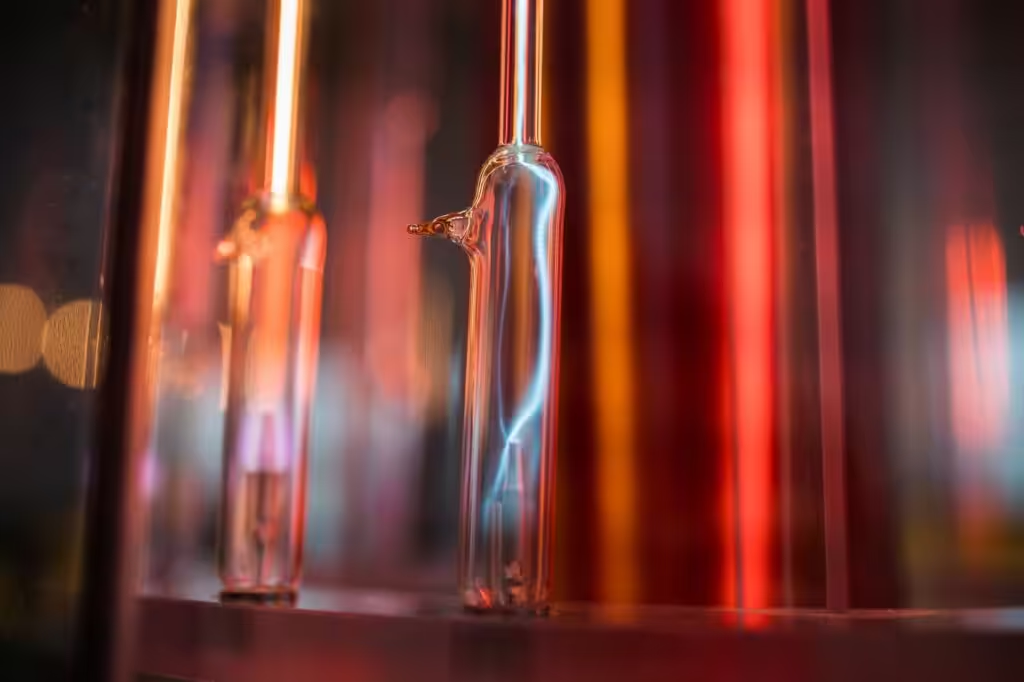
Biohacking is the practice of using data, technology, and lifestyle changes to improve how your body and mind perform. It draws on fields like biology, nutrition, and neuroscience. Biohacking covers a wide range, from tracking your sleep with a smart ring to using a multi-energy wellness platform. This guide focuses on the devices that are safe, practical, and useful for everyday people and wellness businesses.
One of the biggest benefits of biohacking devices is the insight they can provide into how your body responds to daily habits. Many devices collect data such as heart rate trends, sleep quality, activity levels, or glucose patterns.
This information can help you identify patterns over time and make more informed lifestyle choices. Because data quality and accuracy vary by device, you should use the data as general guidance rather than relying on a single reading.
Biohacking devices can also support specific wellness and fitness goals. For example, athletes may use wearable devices to track training and recovery, while non-athletes may monitor sleep or daily activity.
Biohacking devices include a wide range of technologies designed to track personal data, support wellness goals or introduce specific types of energy or environmental exposure into a routine. Common types of biohacking devices include wearables, implantable devices, light-based devices, cold exposure equipment, advanced wellness systems and pulsed electromagnetic field (PEMF) devices.
Small and implantable biohacking devices are tools people may use to simplify everyday tasks, create sensory experiences or collect personal data. Examples can include implanted chips, sensors and other compact technologies designed for specific functions. Because implantable devices may involve medical or safety considerations, they should be carefully researched and discussed with a qualified professional before use.
RFID/NFC implants are tiny chips, often about the size of a grain of rice, that can be inserted under the skin between the thumb and index finger.
This technology may let a user unlock compatible doors, log in to computers, or share stored identification details. These implants usually support access and identification tasks rather than wellness tracking. Anyone considering an implant should seek qualified professional guidance about placement and removal.
Magnetic finger implants involve inserting small magnets under the skin on one or more of your fingers.
These implants allow you to experience sensory enhancement and detect magnetic fields around you.
Transdermal sensors are biohacking devices worn directly on the skin to monitor specific signals or biological markers without being implanted in the body. They are also sometimes called skin-worn sensors or skin sensors.
Biohackers may use transdermal sensors to collect and track personal data over time. Common examples include continuous glucose monitors, hydration sensors and ECG sensors. Each type of sensor measures different information, and accuracy, availability and professional-guidance requirements can vary by device.
Wearable biohacking devices are technologies worn on the body that collect personal data during daily activities, exercise and sleep. Common examples include smartwatches, fitness trackers and smart rings, which can monitor information such as activity, heart rate, sleep patterns and recovery trends throughout the day or night.
When choosing a wearable biohacking device, compare factors such as comfort, battery life, the type of data it tracks, app access and any ongoing subscription costs.
Smartwatches and fitness trackers are wearable biohacking devices designed to collect health, fitness and activity data throughout the day and night. Worn on the wrist like a traditional watch, they can track a range of personal metrics depending on the device.
Common measurements may include heart rate trends, sleep patterns, steps, activity levels, estimated energy expenditure and heart rate variability (HRV). When choosing a smartwatch or fitness tracker, consider the metrics it tracks, app compatibility, battery life, comfort and any ongoing subscription fees. Reviewing trends over time can provide more useful context than relying on a single reading.
Smart rings are wearable biohacking devices that collect personal health and activity data in a smaller, more discreet format than smartwatches or fitness trackers. Depending on the device, they may track sleep patterns, activity levels, heart rate trends, heart rate variability (HRV) and recovery data.
Smart rings may be a good option for people who prefer screen-free tracking or a less noticeable wearable. When choosing a smart ring, compare comfort, battery life, the metrics it tracks, app compatibility and any ongoing subscription costs.
Brain-sensing wearables use EEG sensors to detect signals associated with brain activity during meditation or focus sessions. The Muse headband is a common example. It gives real-time audio feedback that shifts as your mind becomes more settled or more active during a session. These devices may suit people who want to support a meditation or focus practice. They are not a substitute for professional neurofeedback or medical assessment.
Advanced biohacking devices are technologies that add specific types of energy or environmental exposure to a wellness routine. Unlike wearables and smaller devices that primarily collect data or simplify daily tasks, advanced biohacking equipment may require more space, a higher investment and closer attention to setup and product instructions.
Common examples of advanced biohacking devices include light-based devices and controlled cold exposure equipment.
Red and near-infrared light devices are biohacking devices that expose the body to specific wavelengths of red or near-infrared light. These devices are commonly available as handheld units, masks, targeted panels and larger full-body panels.
People may incorporate red and near-infrared light devices into wellness routines focused on skin appearance, general wellness and recovery after physical activity. When choosing a light-based biohacking device, compare factors such as wavelength information, coverage area, session length and intended use. Always follow the manufacturer’s instructions for session duration, eye protection and safe use.

Cryotherapy chambers are cold exposure devices that expose the body to controlled, very low temperatures for a short period of time. Depending on the system, commercial cryotherapy chambers may use refrigerated air or nitrogen-based cooling.
People may incorporate cryotherapy and other forms of cold exposure into wellness or post-exercise recovery routines. Cryotherapy chambers typically require dedicated space, specialized equipment and trained supervision, while cold plunges may be a more practical cold exposure option for home use.
When choosing a cold exposure device, consider the available space, temperature range, session length, supervision requirements and manufacturer guidance. Users should follow all product instructions and consult a qualified healthcare professional when appropriate.
Infrared saunas are heat-based biohacking devices that use infrared light to warm the body more directly than traditional saunas, which primarily heat the surrounding air. Because of this, infrared saunas typically operate at a lower ambient temperature.
People may include infrared saunas in wellness routines focused on relaxation and recovery after physical activity. Common formats include full-size saunas, portable sauna tents and infrared sauna blankets. Infrared saunas are also used in commercial wellness settings, sometimes alongside technologies such as PEMF and red or near-infrared light devices.
When choosing an infrared sauna, consider factors such as available space, temperature range, session length, portability and intended use. Always follow the manufacturer’s instructions for session duration and safe use.
Pulsed electromagnetic field (PEMF) devices use controlled electromagnetic pulses and are available in several formats, including mats, pads, handheld devices and professional full-body systems. PEMF devices vary in their settings, intensity, session length and intended use.
People may incorporate PEMF devices into wellness and post-exercise recovery routines. When choosing a PEMF device, compare factors such as available settings, session time, size, intended use and manufacturer instructions. Users should follow product guidance and consult a qualified healthcare professional when appropriate.
BioCharger incorporates PEMF as one of four energy modalities, along with Light, Frequencies & Harmonics and Pulsed Electric Fields. Unlike a standard PEMF device, BioCharger combines multiple energy modalities within a single wellness platform.
Start with the result you want to track or support. A wearable may suit daily activity tracking, while a larger device may fit a dedicated home wellness routine or business service. Compare the full cost, available space, session length and product guidance before choosing.
| Device Type | Best Suited For | Space Needed | User Involvement | Cost Level |
| Smartwatch or fitness tracker | Daily tracking | Minimal | Low | Low to medium |
| Smart ring | Sleep and activity tracking | Minimal | Low | Medium |
| Skin-worn sensor | Continuous monitoring | Minimal | Medium | Varies |
| Light device | Home wellness routine | Small to large | Medium | Medium to high |
| Cryotherapy chamber | Commercial cold exposure | Dedicated space | High | High |
| PEMF device | Home or business wellness use | Varies | Medium | Medium to high |
| BioCharger | Multi-modality home or business use | Dedicated area | Medium | Premium |
Fitness watches and activity trackers are practical biohacking devices for people who want to monitor daily movement, sleep, exercise or training patterns. The best wearable device depends on your goals and routine. For example, someone who runs every morning may prioritize different features than someone who exercises a few times a week.
Other biohacking devices for home use include light-based devices, cold exposure equipment and PEMF systems. These products may require more space, planning and investment than wearable devices. When choosing a biohacking device for home use, consider your wellness goals, available space, budget, session time and the type of information or experience the device provides.
BioCharger is a multi-modality biohacking device designed for home and professional use. It combines Light, PEMF, Frequencies & Harmonics and Pulsed Electric Fields within one platform. Standard sessions typically last about 10 to 15 minutes, and up to six people can participate in the same session.
Businesses can incorporate biohacking devices into existing wellness, recovery or performance services to respond to growing consumer interest in biohacking. Health and wellness centers, recovery facilities and other businesses may use advanced biohacking devices to complement their current offerings.
When choosing a biohacking device for commercial use, businesses should consider session capacity, staff involvement, available space, training requirements, ongoing support and overall investment.
BioCharger is a multi-modality wellness platform that combines four energy modalities within one system and allows up to six people to participate in a single session. Businesses can use the BioCharger Commercial Use page and ROI calculator to evaluate how the system may fit their services, capacity and operating assumptions.
Whether you are new to biohacking, already use biohacking devices or run a wellness business, the right device depends on your goals, routine and how you plan to use it.
The best biohacking device is not necessarily the one with the most features. It is the device that fits your wellness goals, budget, available space and preferred routine, and that you can use consistently over time. Home users can explore BioCharger for Personal Use, while business owners can review BioCharger Commercial Use options to evaluate how the system may fit their needs.
Common biohacking devices include wearable fitness trackers, smart rings, sleep trackers, red and near-infrared light devices, PEMF devices, cold-plunge systems, and recovery tools. These devices are typically used to track health and performance data or support goals such as sleep, energy, recovery, focus, and overall wellness.
A wearable fitness tracker or smart ring is often a practical first biohacking device because it is easy to use and can provide information about sleep, activity, heart rate, and recovery. Beginners should choose a device based on their primary wellness goal, budget, and how much time they want to spend using or interpreting the technology.
PEMF stands for pulsed electromagnetic field therapy. PEMF devices generate electromagnetic pulses that create changing magnetic fields around the body. These fields can induce small electrical currents in tissues, and PEMF devices are used in a range of wellness and medical applications depending on the device, intensity, frequency, and intended use.
Biohacking devices can cost anywhere from under $100 for basic wearables and recovery tools to several thousand dollars or more for advanced equipment such as full-body light systems, PEMF devices, cold-plunge systems, and commercial wellness technology. Price often depends on the technology, size, features, intended use, warranty, and level of customer support.
Before using a PEMF device, review the manufacturer’s instructions, recommended session length, intensity settings, intended use, and safety information. People with implanted electronic devices, certain medical conditions, or other health concerns should speak with a qualified healthcare professional before use. It is also important to understand that PEMF devices can vary significantly in strength, frequency, design, and regulatory status.
Wearable biohacking devices can provide useful estimates of metrics such as heart rate, activity, sleep, and recovery, but their accuracy varies by device and measurement. They are generally most useful for identifying personal patterns and changes over time rather than replacing clinical testing or medical-grade equipment.
Before purchasing biohacking equipment, a business should compare the technology, intended use, cost, space requirements, session capacity, staff training, ongoing support, warranty, safety information, and potential revenue model. Businesses should also consider how easily the equipment fits into existing services and whether clients can use it consistently without creating significant additional staffing or operational demands.

July 18, 2026
June 30, 2026
Starting at $349/month
Experience the Future of Wellness and Save!
Discover the Endless Benefits of BioCharger: Connect with Our Experienced Team Today!